
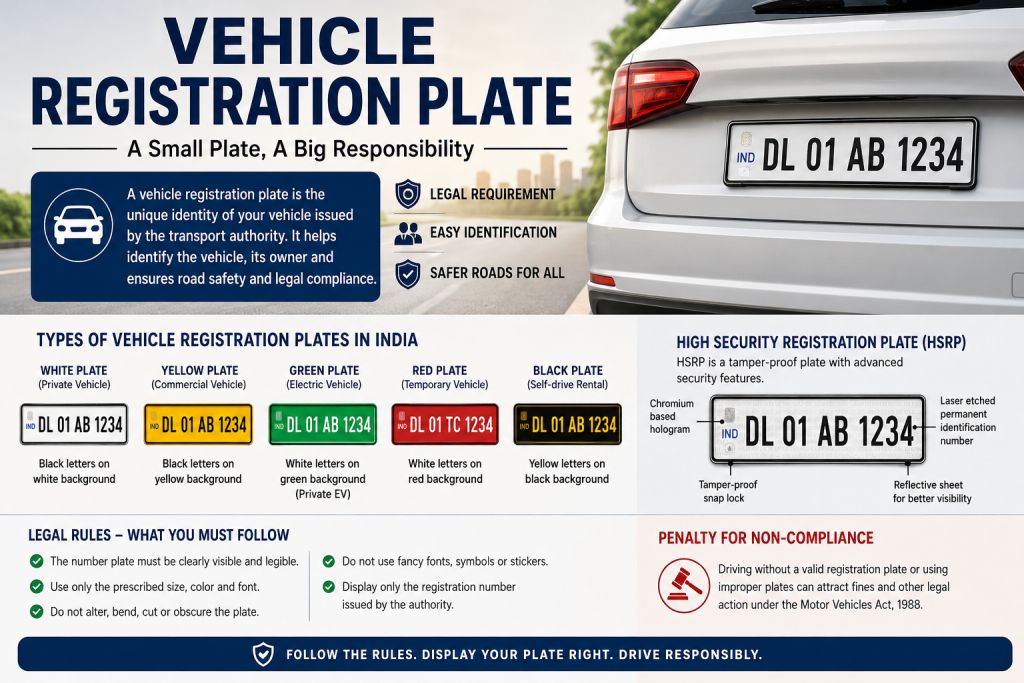
Vehicle Registration Plate: वाहन पंजीकरण प्लेट
Legal EducationTable of Contents
ToggleA vehicle registration plate, commonly known as a number plate, is a metal or plastic plate affixed to a motor vehicle displaying a unique registration number issued by the transport authority. It serves as the official identity of a vehicle and helps government agencies, law enforcement authorities, and the public identify a vehicle for legal and administrative purposes.
In India, displaying a valid registration plate is mandatory under the provisions of the Motor Vehicles Act, 1988 and the rules framed thereunder. Every vehicle operating on public roads must carry a registration number assigned by the Regional Transport Office (RTO).
What is a Vehicle Registration Plate?
A vehicle registration plate is an official identification mark issued by the transport department when a vehicle is registered. The registration number generally consists of:
- State code (e.g., DL for Delhi, UP for Uttar Pradesh)
- RTO code
- Unique vehicle number
For example, in the registration number DL 01 AB 1234, “DL” represents Delhi, “01” indicates the RTO code, “AB” is the series code, and “1234” is the unique vehicle number.
The registration plate enables authorities to identify the owner of the vehicle and maintain records relating to taxation, insurance, permits, and legal compliance.
Importance of Vehicle Registration Plates
1. Vehicle Identification
The primary purpose of a registration plate is to identify a vehicle uniquely. No two registered vehicles can have the same registration number within the same jurisdiction.
2. Law Enforcement
Traffic police and other enforcement agencies use registration numbers to track traffic violations, road accidents, theft cases, and criminal activities involving vehicles.
3. Ownership Verification
Registration plates help determine the registered owner of a vehicle. This becomes important during the sale and purchase of vehicles, insurance claims, and legal disputes.
4. Road Safety and Monitoring
Modern traffic management systems use registration numbers for electronic toll collection, speed monitoring, parking management, and automated traffic enforcement.
Types of Vehicle Registration Plates in India
White Number Plate
A white background with black letters is used for private vehicles owned by individuals.
Yellow Number Plate
Commercial vehicles such as taxis, buses, and goods carriers display black letters on a yellow background.
Green Number Plate
Electric vehicles are provided green registration plates. Private electric vehicles display white letters, while commercial electric vehicles display yellow letters.
Red Number Plate
Temporary registration plates are generally issued to newly purchased vehicles until permanent registration is completed.
Black Number Plate
Vehicles rented under self-drive rental services may use black plates with yellow lettering, subject to applicable regulations.
High Security Registration Plate (HSRP)
The Government of India introduced the High Security Registration Plate (HSRP) system to improve vehicle security and reduce vehicle-related crimes.
An HSRP contains:
- A chromium-based hologram
- Laser-etched permanent identification number
- Tamper-proof snap locks
- Reflective sheet for better visibility
The HSRP helps authorities identify vehicles accurately and prevents duplication or counterfeiting of registration plates.
Legal Requirements Regarding Registration Plates
Vehicle owners must comply with prescribed standards regarding the size, color, font, and display of registration numbers. The registration plate must be clearly visible and legible at all times.
The following practices are generally prohibited:
- Using fancy or decorative fonts
- Altering the registration number
- Obscuring the plate with stickers or accessories
- Displaying misleading symbols or graphics
- Using unauthorized number plates
Violation of these rules may attract penalties under the Motor Vehicles Act.
Penalties for Non-Compliance
Driving a vehicle without a proper registration plate or displaying a number plate contrary to legal specifications can result in fines and other legal consequences. Repeated violations may lead to stricter enforcement measures.
Authorities regularly conduct checks to ensure compliance with registration plate regulations, particularly concerning High Security Registration Plates.
Transfer of Vehicle and Registration Number
When a vehicle is sold, the registration details must be updated in the records of the transport authority. The purchaser should ensure that ownership transfer formalities are completed promptly.
In certain cases, vehicle owners may also apply for retention or transfer of special registration numbers subject to applicable rules and payment of prescribed fees.
Conclusion
A vehicle registration plate is much more than a simple identification tag. It is an essential legal requirement that helps maintain road safety, enforce traffic laws, establish ownership, and facilitate efficient transportation administration. Every vehicle owner should ensure that the registration plate complies with statutory requirements and remains clearly visible at all times. Compliance with registration plate regulations not only avoids legal penalties but also contributes to a safer and more organized road transport system.
Good information