
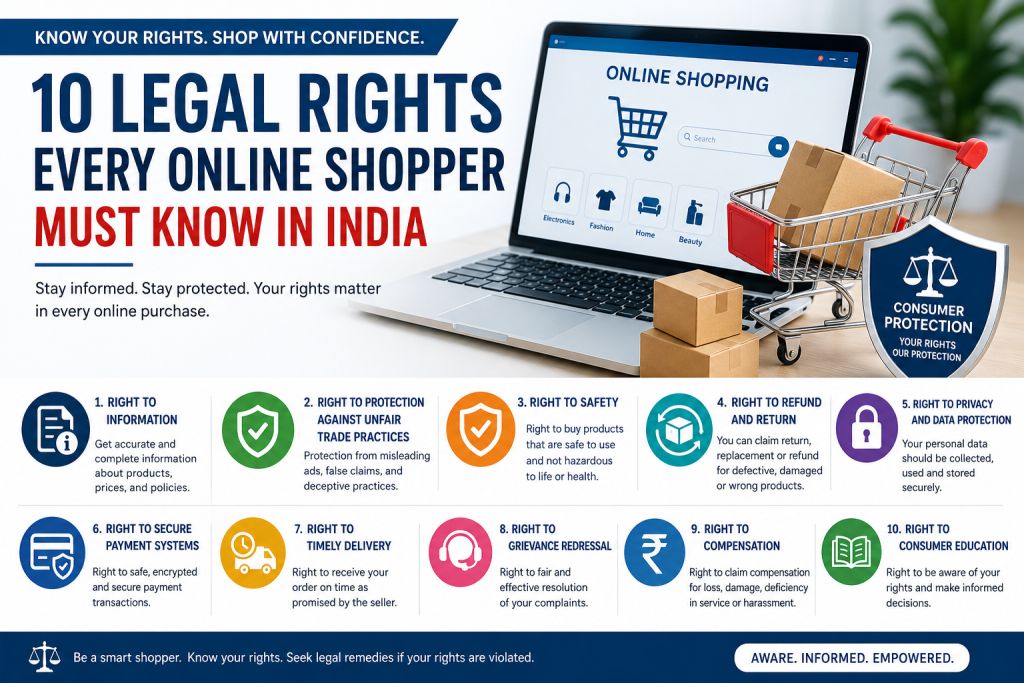
10 Legal Rights Every Online Shopper Must Know in India (2026 Guide)
Legal EducationTable of Contents
ToggleThe rapid growth of e-commerce has transformed the way people buy goods and services. From groceries and electronics to online courses and travel bookings, consumers can purchase almost anything with a few clicks. While online shopping offers convenience and variety, it also creates risks such as fraud, defective products, misleading advertisements, delayed deliveries, and unauthorized transactions. To address these concerns, various consumer protection laws provide legal rights to online customers.
This article explains the important legal rights of customers when purchasing online.
1. Right to Information
One of the most fundamental rights of an online customer is the right to receive accurate and complete information about a product or service before making a purchase.
The seller must clearly disclose:
- Product specifications
- Price and applicable taxes
- Delivery charges
- Terms and conditions
- Return and refund policies
- Warranty information
- Contact details of the seller
Misleading descriptions, false claims, or hidden charges may amount to unfair trade practices and can give consumers the right to seek compensation.
2. Right to Protection Against Unfair Trade Practices
Online customers have the right to be protected from deceptive business practices. A seller cannot:
- Display false product images
- Make misleading advertisements
- Provide incorrect information about quality or origin
- Manipulate prices unfairly
- Sell counterfeit products
If a customer receives a product that differs significantly from what was advertised, the customer can seek a replacement, refund, or legal remedy.
3. Right to Safety
Consumers have the right to purchase products that are safe for use. Online sellers and marketplaces should not sell goods that may cause injury or harm.
For example:
- Defective electrical appliances
- Expired food products
- Unsafe toys
- Counterfeit medicines
If a dangerous product causes loss or injury, the customer may be entitled to compensation under applicable consumer protection laws.
4. Right to Refund and Return
Many online platforms provide return and refund facilities. While return policies may differ from one platform to another, customers generally have the right to receive a refund when:
- The product is defective
- The wrong item is delivered
- The item is damaged during transit
- The product significantly differs from its description
Customers should carefully read the return policy before placing an order and preserve invoices, emails, and screenshots as evidence.
5. Right to Privacy and Data Protection
Online shopping often requires customers to share personal information such as:
- Name
- Address
- Mobile number
- Email address
- Payment details
Consumers have the right to expect that their personal data will be collected, stored, and used responsibly. E-commerce companies should implement reasonable security measures to prevent unauthorized access, misuse, or disclosure of customer information.
If personal data is leaked or misused, customers may have legal remedies depending on the applicable data protection laws.
6. Right to Secure Payment Systems
Customers have the right to use secure payment methods while shopping online.
E-commerce platforms should ensure:
- Encrypted payment gateways
- Secure transactions
- Protection against unauthorized payments
- Proper authentication procedures
If fraudulent transactions occur due to negligence on the part of the platform or service provider, customers may seek redress through consumer forums or banking grievance mechanisms.
7. Right to Timely Delivery
When an online seller promises delivery within a specified period, customers have the right to expect timely delivery.
Unreasonable delays without proper communication may amount to deficiency in service. In such cases, customers may demand:
- Delivery of the product
- Cancellation of the order
- Refund of the purchase price
- Compensation in appropriate cases
Keeping records of delivery promises and communication with the seller can be helpful in resolving disputes.
8. Right to Grievance Redressal
Customers have the right to file complaints when their issues are not resolved satisfactorily.
Most e-commerce platforms provide:
- Customer support services
- Complaint portals
- Grievance officers
- Online dispute resolution mechanisms
If internal grievance procedures fail, consumers may approach consumer dispute redressal commissions or other competent authorities as provided under law.
9. Right to Compensation
Where an online customer suffers financial loss, mental harassment, inconvenience, or injury due to the actions of a seller or platform, compensation may be available.
Compensation may be claimed for:
- Defective goods
- Deficiency in service
- Misleading advertisements
- Fraudulent practices
- Unfair trade practices
The amount of compensation generally depends on the facts and circumstances of each case.
10. Right to Consumer Education
Consumers have the right to be informed about their legal protections and available remedies.
Before making online purchases, customers should:
- Read reviews carefully
- Verify seller details
- Check return policies
- Use secure payment methods
- Preserve transaction records
An informed consumer is less likely to become a victim of online fraud.
Conclusion
Online shopping has made life easier, but it also requires consumers to be aware of their legal rights. Customers have the right to accurate information, safe products, secure payments, privacy protection, timely delivery, refunds, and effective grievance redressal. Understanding these rights helps consumers make informed decisions and seek legal remedies when problems arise.
As online commerce continues to expand, awareness of consumer rights remains essential for creating a fair, transparent, and trustworthy digital marketplace.