
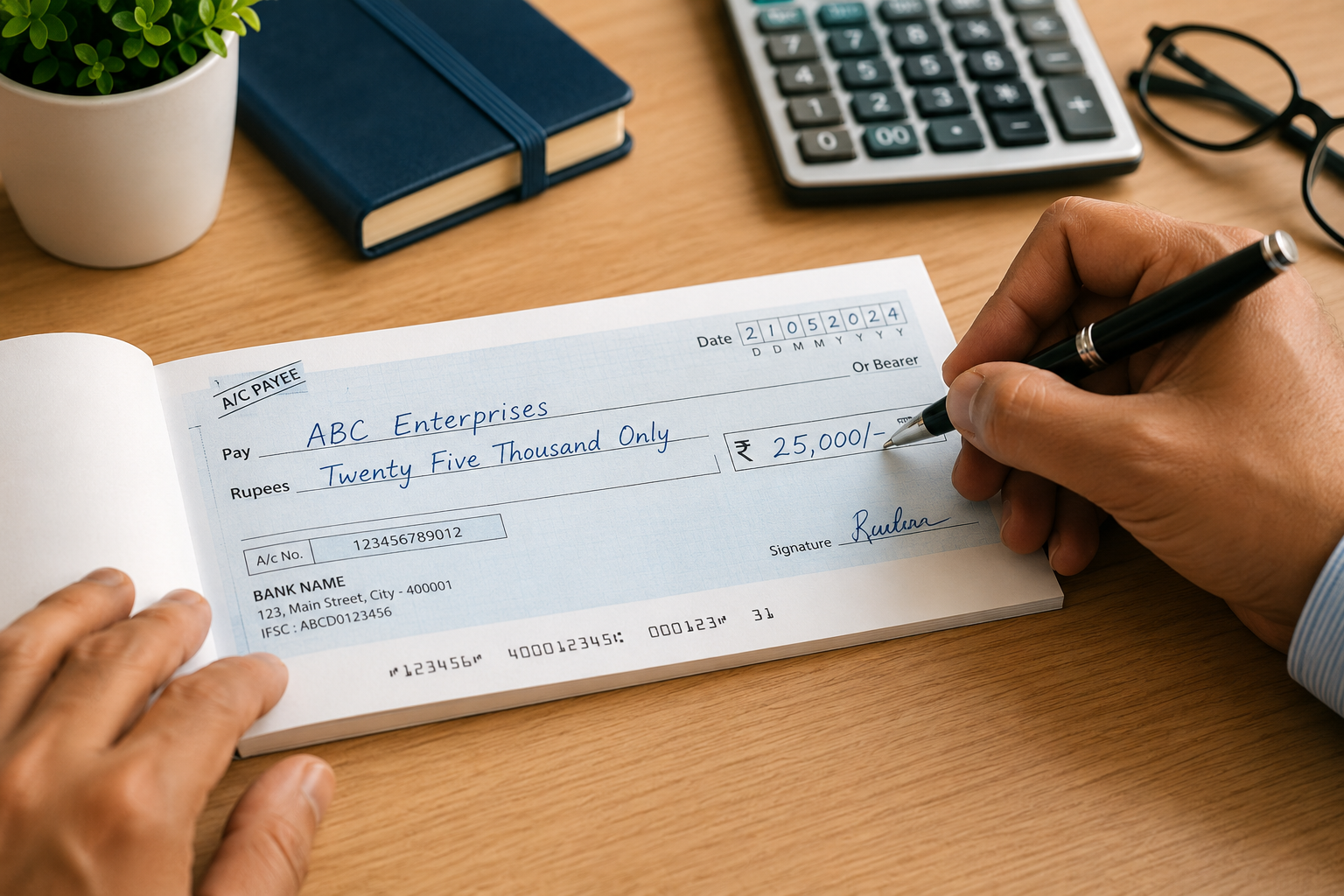
10 Important Points to Remember When Drawing a Cheque in India
Finance
In the age of digital banking and online transactions, cheques continue to play an important role in commercial dealings, business transactions, and personal financial arrangements. A cheque is a negotiable instrument governed by the provisions of the Negotiable Instruments Act, 1881, and any mistake while issuing a cheque can lead to disputes, dishonour, financial loss, or even legal consequences.
Whether you are issuing a cheque for a business payment, rent, loan repayment, or personal transaction, it is important to follow certain precautions. The following points should always be remembered while drawing a cheque.
1. Write the Date Clearly
The date is one of the most important components of a cheque. Always write the date clearly in the prescribed format. A cheque is generally valid for three months from the date mentioned on it. An incorrect or unclear date may result in rejection by the bank.
Avoid post-dated or stale cheques unless there is a specific reason for issuing them.
2. Mention the Correct Name of the Payee
The name of the person or organization receiving the payment should be written accurately. Any spelling mistake may create difficulties in encashment or deposit.
Where possible, write the full legal name of the payee and avoid abbreviations that may create confusion.
3. Write the Amount Carefully
The amount should be written both in figures and in words. Ensure that both amounts match exactly. If there is a discrepancy between the two, the bank may refuse to honour the cheque.
For example:
- Figures: ₹25,000/-
- Words: Rupees Twenty-Five Thousand Only
Always draw a line after the amount written in words to prevent unauthorized additions.
4. Avoid Blank Spaces
Leaving blank spaces on a cheque can create opportunities for fraud or alteration. Fill all relevant fields properly and draw lines through any unused spaces.
For instance, after writing the payee’s name and the amount, ensure that no extra space remains where additional words or figures could be inserted.
5. Sign Consistently
The signature on the cheque should match the specimen signature available with the bank. A mismatch in signatures is one of the most common reasons for cheque dishonour.
Always use the same signature style that is registered with your bank.
6. Ensure Sufficient Funds
Before issuing a cheque, make sure that adequate funds are available in your account. Issuing a cheque without sufficient balance may result in dishonour.
Cheque dishonour due to insufficiency of funds may attract legal action under Section 138 of the Negotiable Instruments Act, 1881, subject to fulfilment of statutory requirements.
7. Use Account Payee Crossing for Safety
If the cheque is intended to be deposited into the payee’s bank account only, write “A/C Payee” between two parallel lines on the top left corner of the cheque.
This reduces the risk of misuse and provides an additional layer of security.
8. Avoid Overwriting and Corrections
Banks may reject cheques containing excessive alterations, overwriting, or corrections. If a mistake occurs while writing a cheque, it is often safer to cancel the cheque and issue a fresh one.
A clean and properly filled cheque minimizes the chances of rejection.
9. Keep a Record of Issued Cheques
Maintain records of cheque numbers, dates, amounts, and payee details. Such records can be useful for accounting purposes and in case of future disputes.
Businesses should maintain a cheque issuance register for better financial management.
10. Never Sign a Blank Cheque
Signing a blank cheque is highly risky. If the cheque falls into the wrong hands, it can be misused and may expose the drawer to financial and legal complications.
Always fill in all material particulars before signing the cheque.
Legal Consequences of Carelessness
A cheque is not merely a payment instrument; it also carries legal significance. Carelessness while issuing a cheque may result in civil disputes, criminal proceedings, or financial liability. Courts in India have repeatedly emphasized the importance of maintaining the credibility of cheque transactions in commercial dealings.
Therefore, every account holder should exercise due caution while drawing a cheque.
Conclusion
Although digital payment methods are becoming increasingly popular, cheques remain an important and legally recognized mode of payment. A properly drawn cheque ensures smooth transactions, protects against fraud, and reduces the risk of disputes.
By remembering simple precautions such as writing accurate details, avoiding alterations, maintaining sufficient funds, and signing correctly, individuals and businesses can use cheques safely and effectively. Responsible use of cheques not only safeguards personal finances but also promotes trust and reliability in financial transactions.
FAQ:
Ans: Cheque validity of a is 90 days from the date which is mentions on the cheque.